the bet
The challenge wasn't making AI work. It was earning the right to be trusted.
Every year, over 2 million students land on Careers360 asking some version of one question: "What happens to me now?"
For years, the only high-quality answer path was a human counselor — wait times during peak results season stretched past 48 hours, and competitors had already begun rolling out AI guidance to pull students out of our funnel.
The core risk wasn't technical, it was high stakes. A confident, incorrect answer here isn't just a bad recommendation - it's a family betting a year of their life on it.

Entrance Exams
Admissions & Process
What happens to me now?
Fees & Scholarships
College Cutoffs
10M+
Monthly learners already
on the platform
20K+
Colleges, exams & courses
in the dataset
3
Distinct audiences to
serve at once
1st
Conversational guidance
layer of its kind
THE PROBLEM (EVIDENCE)
Our search showed them colleges.
It never answered if they could get in.
We tracked 1.2M sessions and audited 20K screen replays during peak admissions to understand where and why students drop off.
Web funnel (June - Aug 2024)
Landing
Search
College page
Compare
Next Action
Clicked/Saved
100%
1,248,340
users
62%
774,980
users
31%
387,920
users
19%
237,410
users
8%
99,420
users
College Result Page
69%
Fees & placement
62%
Cutoff details
58%
Compare
55%
Predictor
48%
Where do students get stuck?
Highest exit rate by page type
Primary · Student
The Unsure Student
unclear intent · high anxiety
I don't even know what I'm actually supposed to be asking.
• Struggles with open input boxes; lacks the
vocabulary to prompt cleanly.
• Fears making wrong choices based on partial
or misleading search queries.
• Input hesitation leads to high zero-state
bounce instead of exploration.
Secondary · Parent
The Careful Parent
trust-sensitive · pays the bill
How do I know this is true when it impacts my child's future?
• Skeptical of raw AI output without verifiable
cutoffs and official sources.
• Cross-checks stats against state counseling
PDFs before taking any action.
• Any unverified data or sponsored bias
immediately breaks product trust.
Tertiary · Educator
The Overloaded Guide
guidance at scale · expertise
I can't give 300 students personal advice one on one every day
• Spends hours repeating basic eligibility
checks instead of deep counseling.
• Needs structured decision artifacts they can
safely review and stand behind.
• Wants tools that automate data retrieval
without replacing human counsel.
The Core Problem
Students have to open 6+ tabs, read complex cutoff PDFs, and do the math alone.
Finding data is easy. But figuring out "Can I actually get into this college with my rank and category?" is where everyone gets stuck and gives up.
Key Takeaways
69% drop after opening a college result page — They found the college, but couldn't make sense of the cutoffs for their situation.
Only 8% take a next step — Showing raw tables and links left 92% of students without an answer.
Why AI: More filters won't solve paralysis. Students don't need another database view; they need a guide that turns complex cutoffs into clear, personalized next steps.
THE TURNING POINT
We gave them 500 colleges. What they needed was a decision.
We went deep to understand how students discover, evaluate and decide on colleges.
1.2M+
Sessions Analyzed
(Peak Drop-off)
20K
Session Replays
Audits
15
Contextual inquiries
across 11 cities
69%
Result page
exit rate
What we heard...
“I don't know what questions to ask. I just want the right colleges for me.”
R
Rohit, 20
JEE Aspirant, Jaipur
“Even when I get the answer, I want to know where this is coming from. Otherwise I'm not sure if I should trust it.”
A
Ayesha, 19
BCA Aspirant, Lucknow
“Information is easy to find. Deciding what to do next is the hard part.”
K
Karan, 20
COMEDK Aspirant, Bengaluru
“I’m comparing 5–6 colleges but still feel I might be missing something important.”
M
Meera, 18
JEE Aspirant, Pune
The core shift: Stop dumping 500 college options on an anxious teenager. Start asking the hard constraints upfront, back every claim with official receipts, and give them a shortlist families can trust.
From Insight to Opportunity
Transform Careers360 from an overwhelming directory into an honest advisor that helps students move from panic to a clear, confident decision via grounded AI.
How to measure it
Faster Decisions
Slashed late-night tab sprawl and fewer exploratory sessions to build a shortlist.
Real Action
+25% lift in students moving directly into high-intent tools (Predictor, Direct Application).
Trust in the Data
High click rates on official source tags before students make a final shortlist save.
Human Fallback
Instantly passing complex edge cases to human counselors instead of guessing.
What Happened
Why it Happened
What we built
The Core Goal
Starting the Search
38% Entry Drop-Off • 68% Vague Queries
Students typed vague queries like "best B.Tech college" and bounced immediately out overwhelm.
Empty Inputs Intimidate
An empty search bar assumes vocabulary students don't have, triggering paralysis during peak anxiety.
Guided Starting Prompts
Replaced open search with adaptive prompts that conversationally unpack exam, rank, and budget.
Believing the Answer
62% Fee Exit • 58% Cutoff Exit
Support calls spiked with parents asking to confirm site facts. Without proof, families refused to act.
Smooth Answers Feel Suspicious
Polished text without an official paper trail feels like sales copy. High stakes demand visible verification.
Clear Source Receipts
Tethered every fee, cutoff, and seat count directly to the official government gazette and counseling round stamp.
Taking Action
69% Result Exit • Only 8% Take Action
Students read raw data tables and left without saving or shortlisting, burning out in multi-tab sprawl.
Data Walls Stall Momentum
Dumping tables onto an anxious user forces 8+ comparison tabs. Without clear forks, momentum dies.
Action-Oriented Decision Cards
Turned static answers into interactive tools: side-by-side comparison, cutoff simulator, and 1-tap shortlisting.
Getting Personal
Upfront Form Abandonment
High drop-offs at filter walls asking for sensitive personal, rank, and financial limits upfront.
Trust Must Come First
Students won't disclose private ranks or family budget limits until the system proves it can help.
Progressive Questions
Captured student context turn-by-turn as it became relevant, removing upfront gatekeeping entirely.


THE landing page, decoded
One promise, one calm action
A single sentence - Discover, Decide, Succeed — one CTA, supported by trust cues (instant, reliable, insightful). The hero reduces overwhelm and guides users to the next step
Before the conversation:
earning the first click


Why Careers360
The three cards - stop endless searching, compare with confidence, pick up where you left off - map one-to-one to the research pains. Each leads with the outcome the user wants, not the mechanism behind it.
Feature block
Every benefit claim sits beside a live preview of the real conversation UI. Pairing the promise with the actual interface makes it concrete and credible — show, don't tell.
Closing CTA
Your education journey awaits - one emotional, forward promise and one button. It mirrors the in-product principle: every surface ends in a clear next step, never a dead end.


Conversational screens
Guiding the first question
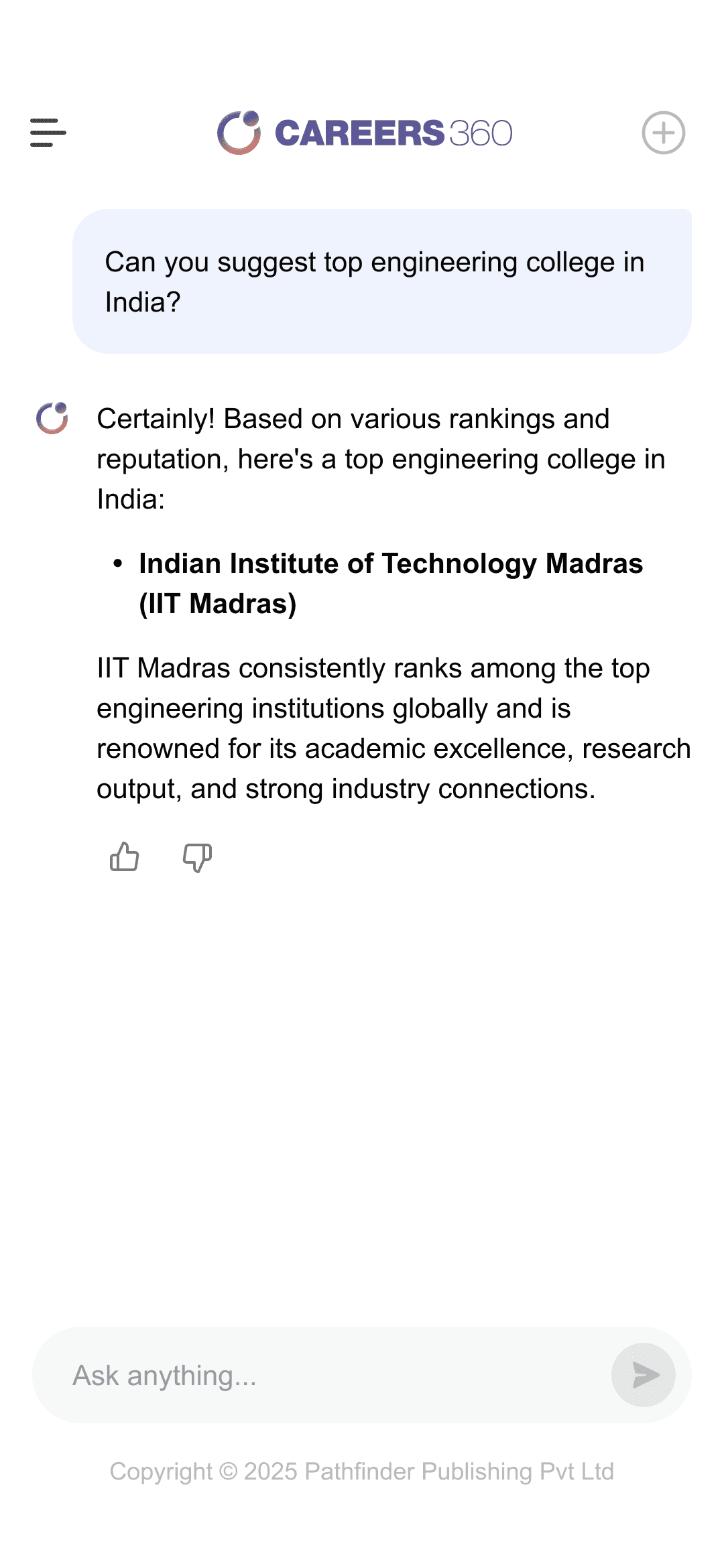
A blank input box makes anxious students freeze. We placed targeted prompt chips right where they start, nudging them into high-value questions before they have to figure out what to type.
The Zero-State:
Scaffolding the First Turn


Can you suggest a top engineering college in India?
Just a second...
Zero-friction intent entry
Accepts broad, ambiguous prompts gracefully without demanding immediate rank, quota, or budget parameters.


Cognitive scoping over data dumps
Returns a single grounded benchmark to lower anxiety and set up progressive constraint filtering.


Allows students to pivot to a different exam track without corrupting active filters.
Instant keyword retrieval to quickly pull up previous cutoff and date answers.
Chronological history preserves every past inquiry, removing the need to hoard open browser tabs.
Session continuity across fragmented decisions

Pairs conversational answers with official announcement links below the fold, letting students verify criteria without running new searches.
Grounding answers with source citations
ENTRY PROMPTS
Scaffolds ambiguous intent into structured starting chips directly above the keyboard to eliminate query freeze.
SYSTEM THINKING
Transparent status cues turn query latency into a trust signal, confirming active database lookup over speculative guessing.
STRUCTURED SYNTHESIS
Delivers a grounded institutional benchmark with clear context rather than overwhelming the student with a 50-row data dump.
CONTINUOUS PROGRESSION
Subsequent recommendations build sequentially down the thread, enabling side-by-side trade-offs without losing prior context.



PERSISTENT HISTORY
A cross-device historical drawer prevents context loss when a user moves between mobile and desktop, enabling long-tail decision research.
VERIFIED RECEIPTS
Institutional answer cards, like IIT Bombay’s profile, are anchored in deterministic data. Explicit source citations prioritize governance over generic text-generation, earning tru
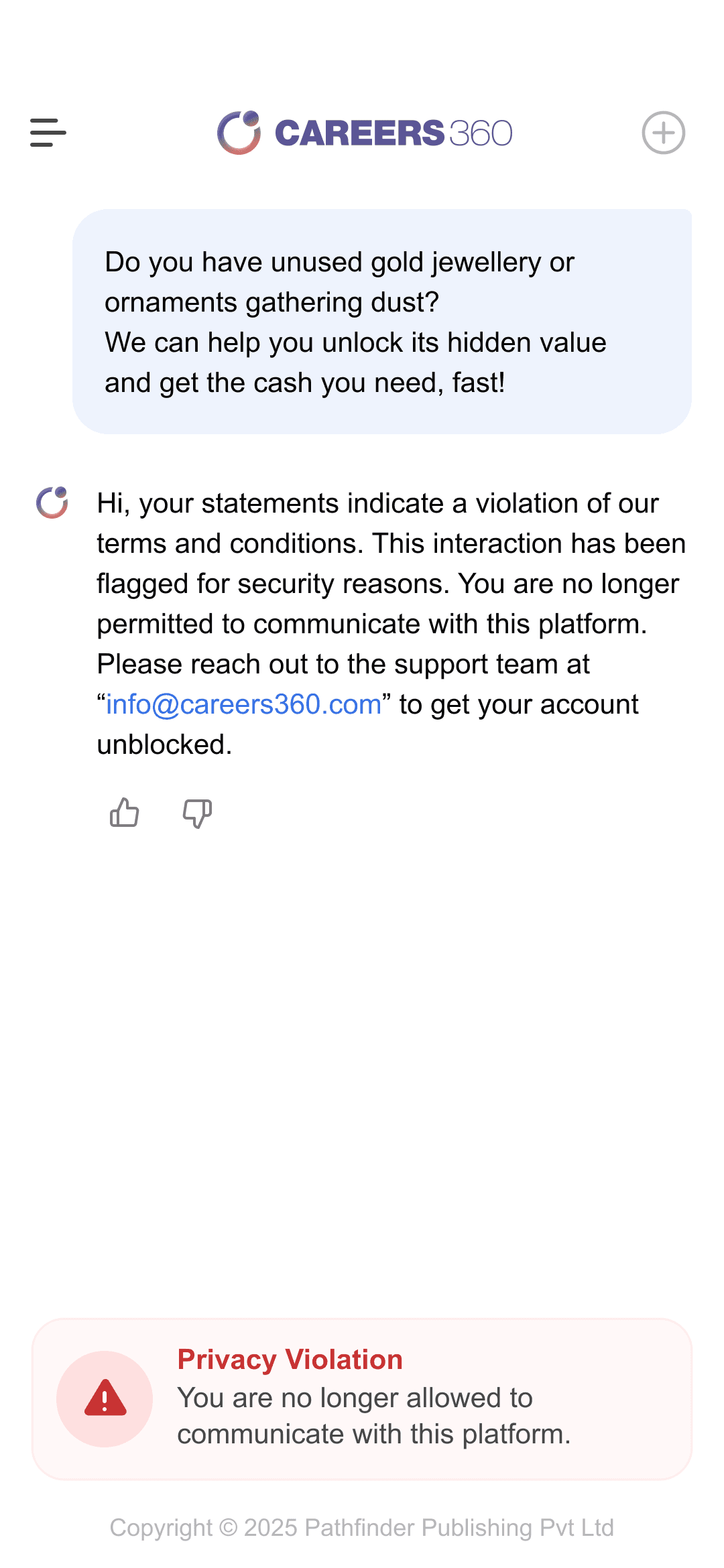
Ethical GUARDRAILS
Non-blocking recovery flows are crucial. When a context violation occurs (pivoting to finance), the interface explicitly flags the issue while restoring educational intent.
FAILURE STATES
Connectivity errors (like No Internet) are grounded with institutional responsibility. The component reassures the user that their complex diagnostic parameters remain safe in working memory.



Decisions & trade-offs
Every call owned its downside
Senior design isn't picking the clever option — it's being accountable for what each choice costs, and designing the mitigation in the same breath.
User problem
Decision
Why
Trade-off & mitigation
Blank search caused drop-off
at the very first step
Guided prompts on entry
Entry pattern
Removes blank-state anxiety; users
start with primed intent instead of a
void.
Structure vs. freeform
→ Kept the open input
primary as an escape hatch
AI confidence could outrun
the evidence behind it
A visible trust ladder
Trust system
Tying visual weight to confidence
prevents fluent, dangerous wrong
answers.
Honesty vs. slickness
→ Hedging designed to feel
helpful, not hand-wavy
Dense answers lost users
mid-read
Answer-first, layered detail
Response design
Comprehension and comparison
improve when the recommendation
leads.
Simplicity vs. nuance
→ Progressive disclosure
for depth on demand
Zero-match results lead to
instant exits and panic
Always suggest a backup
Performance
A dead-end search is when people
need better options the most.
Hard truth vs. false hope
→ Direct about no matches, but immediately points to practical alternatives
hypothesis Impact
Estimated impact — and the measurement framework.
I'd rather show one number I can defend than six I can't. Each
result is paired with the design mechanism that drove it.
~29%
Lower first-question abandonment
Guided prompts replace the blank-state problem, helping students start with intent instead of figuring out the perfect question.
3.1→4.4
Higher trust in
recommendations
Source-backed answers, confidence-aware responses, and visible evidence help users understand not just what the system recommends, but why.
Fewer
Lower edge-case
session exit rate
Directing zero-match moments into actionable fallback discovery paths, validated by pre-launch usability modeling.

Let’s build together
If you're navigating a complex problem or building something that matters, I'd love to hear about it.
Turning India’s deepest education dataset into trusted, real-time conversational guidance
Applying to college in India is chaotic. I designed an AI conversational guide that turns confusing admission data into clear, personalized answers for students.

Role
Lead Product Designer
Ownership
Research → Ship
Team
1 PM · 4 Engineers
Timeline
12 weeks · 2025
output
View Website